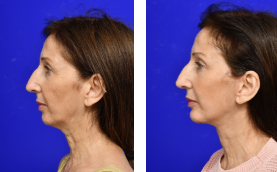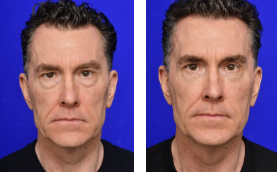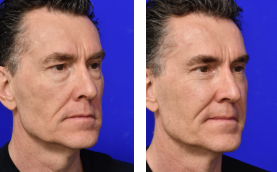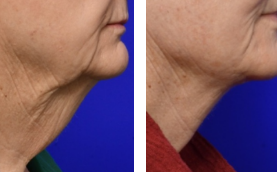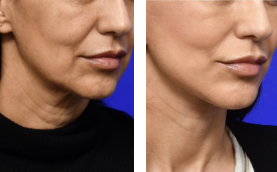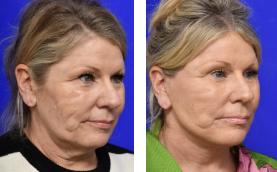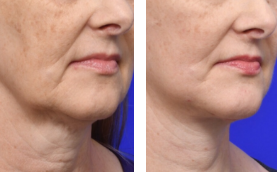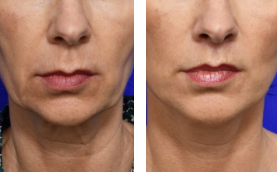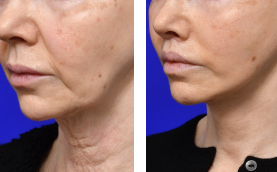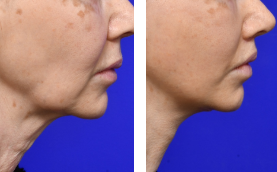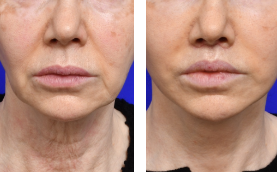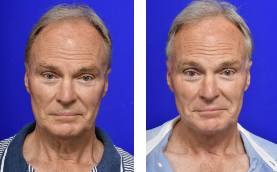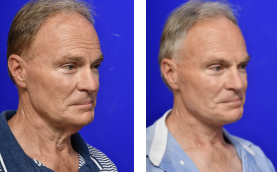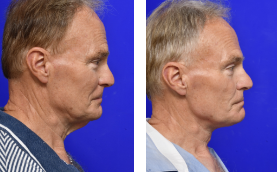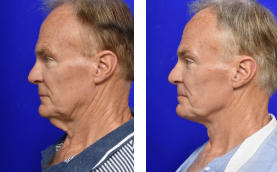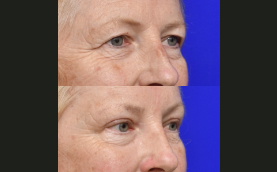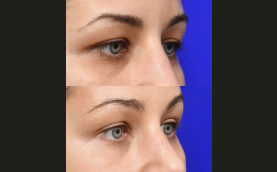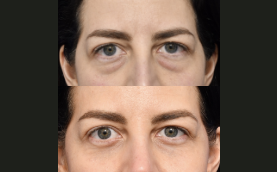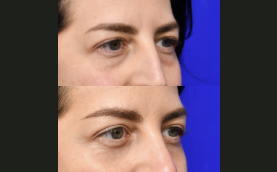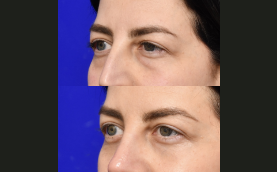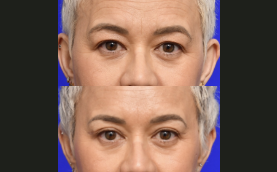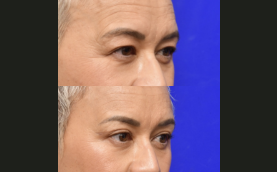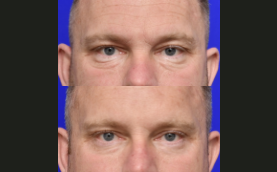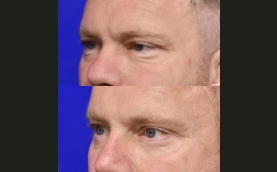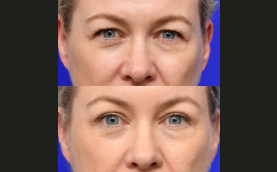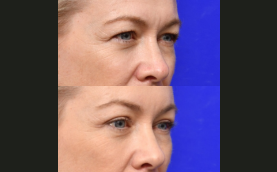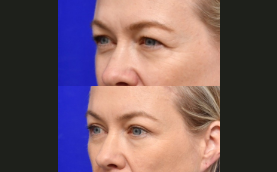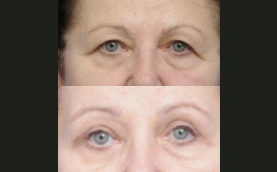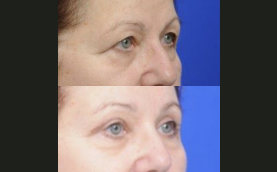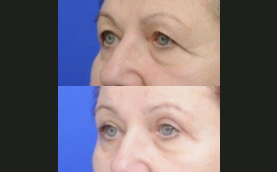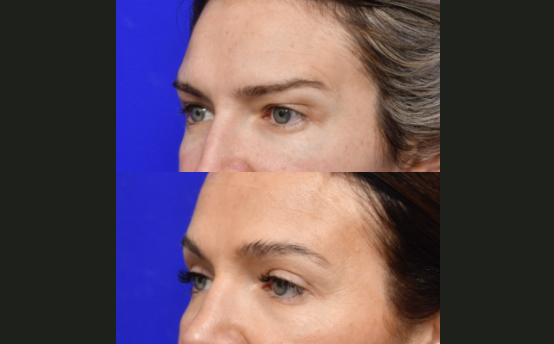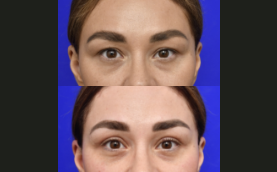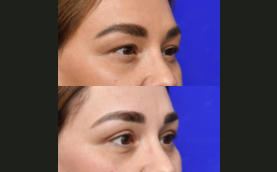
View the work Of Dr Greensmith

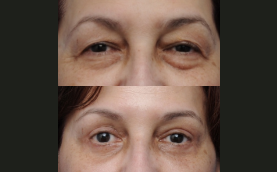

Dr Greensmith has more than 20 years of experience performing brow lifts and/or temporal lift /suspension surgery to address his patients’ aging and aesthetic concerns.
Brow lift surgery has evolved significantly since its early descriptions. Early procedures involved various incisions above the brow in folds and creases. These more direct lifts (called direct because of their proximity to the brows) are powerful but can lead to obvious scars, loss of brow hair, and irregular brow contours.
Surgery then evolved to large hidden incisions behind the hairline (through an open or coronal approach). While less powerful than the more direct lifts, these tend to be more aesthetically pleasing and are longer lasting. However, this open approach to a brow lift is still an incredibly invasive procedure that can lead to unfavourable and long-lasting negative side effects, such as:
- mild to moderate hair loss along the incision line
- prolonged numbness
- tingling, itching and other strange sensations
- visible bruising and swelling
Endoscopic brow lifting pioneered in the early 2000s has revolutionized the surgery. The Endoscopic procedure is a more advanced technology, which requires a strong understanding and familiarization with the equipment used by a qualified plastic surgeon. In this minimally invasive technique, small pre- or post-hairline incisions are made, through which a lighted endoscope (an instrument that can be introduced into the body to give a view of its internal parts) is used to release the brow internally. Then, the brows are lifted and fixated into a new and elevated position. This new brow lift technique rarely produces hair loss, and the other side effects related to the open approach are much less severe and shorter-lived. Endoscopic brow lifts are also favourable because they leave no obvious incisions or scars once healed, and the benefits are long-lasting.
Finally, various procedures are described that lift/support the brows from eyelid incisions. In my view, these “browpexy” procedures are more adjuncts to formal brow lifts than standalone procedures with cosmetic brow lifts.
What do I feel is best for patients? Here are my guidelines:
1. Brow lifts are not only about height but also about shape, arch and contour. For this reason, I prefer the term “brow-recontour” or “brow modulation – as the shape, arch and contour must be evaluated and planned.
2. The brows and upper lids should always be considered together as one aesthetic unit. Aesthetics should be considered when surgically addressing these structures as we age.
3. Pay attention to, and emphasize, the outer brow. It has been shown that the outer brow can be prone to skin laxity with age. This should be the emphasis of brow lifts so as not to create an unusual shape to the brow after surgery.
4. Anyone who has skin overhanging the upper lids beyond the lateral canthus (where the outer upper and lower lid meet) is a candidate for an outer brow lift (lateral temporal lift /suspension) Otherwise, to address this skin, the eyelid incision must be elongated beyond the eyelid crease
5. Never over lift the brow. This surgery is about subtle adjustments to allow appropriate eyelid surgery.
Recovery
Patients undergoing Brow or Temporal Lift surgery may go home the same day or may stay a night or two in the hospital, depending on the extent of the surgery. Sutures will be removed after 5-9 days, and you can return to work and social life in 2-3 weeks in most instances. You can resume light exercise in 3 weeks but avoid more strenuous activity for 4 weeks.